 mustard seed, hidden in the ground, that would grow into the largest garden plant. Jesus described the birds nesting in its branches to connect his parable with a similar parable about a kingdom from Ezekiel 17.
Matthew 13 has seven parables. Four of the them teach that the kingdom of God is hidden yet valuable; three explain why only some respond positively to the message of the kingdom; all of them invite us to seek the kingdom.
Why did Jesus teach this set of parables? Just before, the Pharisees make a formal decision about Jesus: "This man casts out demons only by Beelzebul, the ruler of demons" (Matthew 12:24). In the remainder of Matthew 12, Jesus denounces their claim and the hearts that would produce such twisted logic. In Matthew 13, Jesus' parables explain why the Pharisees and others rejected the kingdom (bad soil, weeds, trash fish) and why Jesus' kingdom didn't look like much yet (mustard seed, yeast, pearl, treasure).
There is comfort and challenge yet in these parables. Comfort, because the kingdom still looks small and weak today, and many reject it. We kingdom citizens and kingdom soldiers know our weakness (when we are honest) and we mourn at the failures around us and in us. Challenge, because the parables call us to recognize the value of the kingdom and seek it with all our hearts.
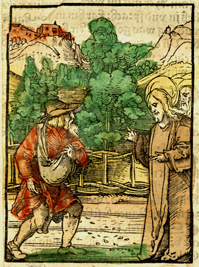
The picture: Parable of the Sower, from Das Plenarium oder Ewangely Buoch, 1516. Courtesy of the Digital Image Archive, Pitts Theology Library, Candler School of Theology, Emory University.


